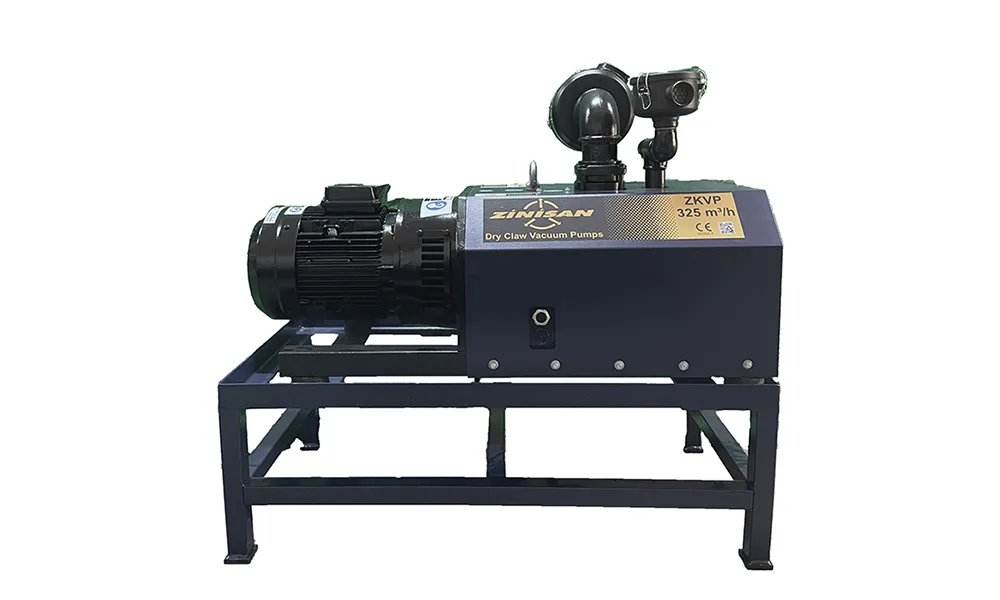
Dry-type claw vacuum pumps contain no oil in the compression chamber. Two claw-shaped rotors, rotating without contacting each other, draw in, compress, and discharge air. This design provides significant advantages in many applications where oil-lubricated pumps are unsuitable.
How does a claw pump work?
The rotors rotate at the same speed with a very small clearance between them thanks to synchronous gears. Since the rotors do not rub against each other or the housing, there are no wearing parts such as vanes. The gearbox and bearings are lubricated, but this section is isolated from the compression chamber; the evacuated air does not come into contact with oil.
Key advantages
- Oilless compression: No oil vapor is generated in the exhaust air, eliminating the risk of oil contamination to the product and the environment.
- Low maintenance: Oil changes and exhaust filters are not required; maintenance is mostly limited to checking the gearbox oil and filter.
- Suitability for continuous duty: The non-contact design ensures stable performance during long-term and intensive operation.
Typical applications
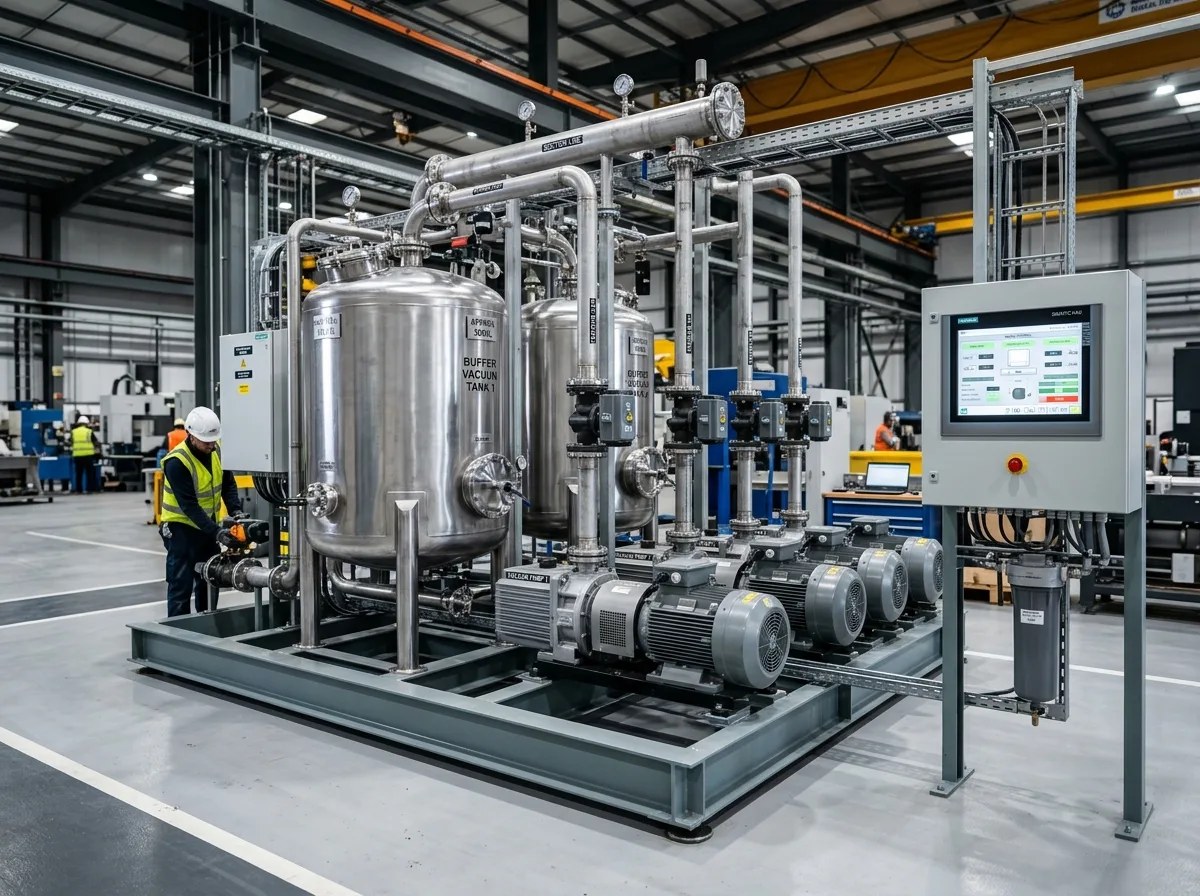
- Workpiece clamping in central vacuum systems and CNC router tables
- Pneumatic conveying and vacuum loading systems
- Oilless vacuum requirements in food and packaging lines
- Holding and feeding in woodworking, paper, and printing machinery
Where is an oil-lubricated pump more suitable?
In vacuum packaging, drying, and laboratory applications requiring very low ultimate pressure, oil-sealed pumps achieve a deeper vacuum. The dry-type ZKV series, on the other hand, is designed for applications requiring high displacement and oilless operation at a medium vacuum level.
If you are unsure which type is more suitable for your application, contact us with your operating pressure and evacuated medium information, and let us jointly make the right selection between the ZKV and ZYVP series.